




KAIO
KAIO
KAIO Timeline

KAIO Token allocation
KAIO BasicReport a Data Error
KAIO Info
KAIO Intro
KAIO is a blockchain-based protocol focused on bringing real-world assets (RWAs) onchain, with a particular emphasis on institutional-grade funds. It provides infrastructure that enables traditional financial products—such as money market funds, private credit, and hedge funds—to be tokenized and accessed through decentralized networks. By doing so, KAIO aims to bridge the gap between traditional finance (TradFi) and decentralized finance (DeFi).
The platform is designed to ensure compliance, liquidity, and seamless asset movement through its sovereign AppChain architecture. KAIO allows users to buy, trade, and utilize tokenized assets across different networks, while also enabling additional utility such as collateralization and lending. Its focus on user experience and interoperability aims to make institutional assets more flexible and accessible in an onchain environment.
KAIO collaborates with established financial institutions and asset managers to offer tokenized investment products tailored for accredited and institutional investors. These include funds from firms like BlackRock, Hamilton Lane, Laser Digital, and Brevan Howard. Through these partnerships, KAIO positions itself as a key player in the rapidly growing RWA sector, targeting the integration of trillions of dollars in traditional financial assets into blockchain ecosystems.
KAIO Unlock & AllocationReport a Data Error
KAIO Token allocation
Q&A about KAIO Tokenomics
Explore the tokenomics of KAIO and review the project details below.
What is the allocation for KAIO?
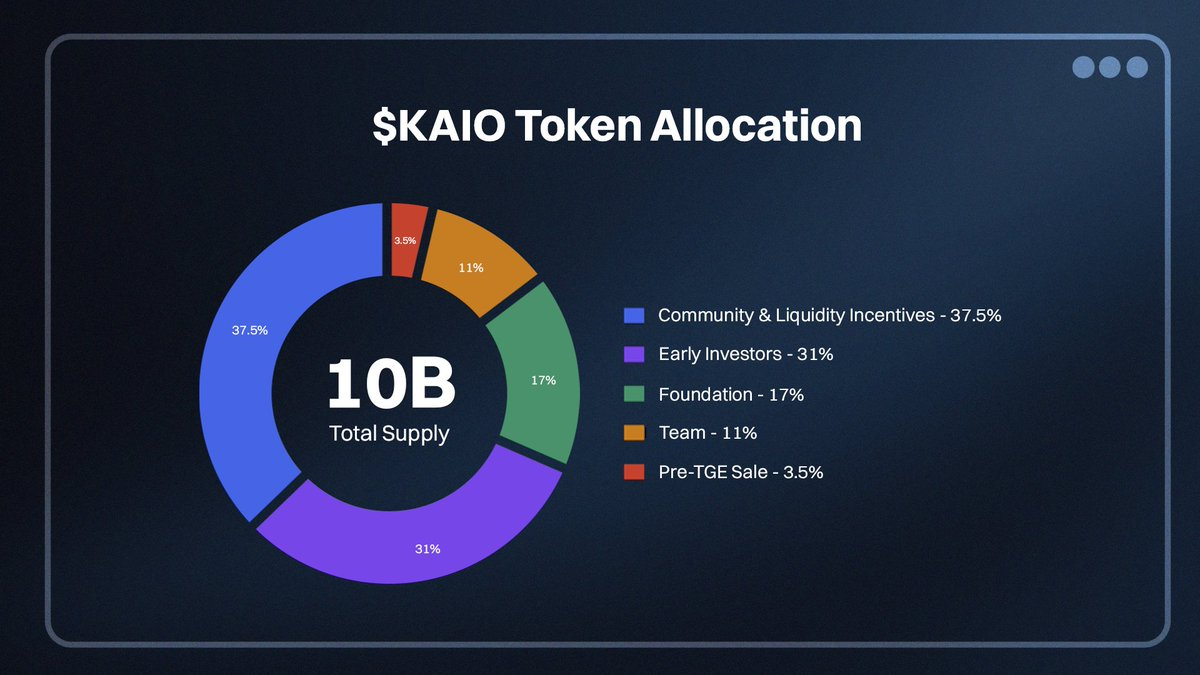
The total supply is fixed at 10 billion tokens. The allocation has been designed to prioritize long-term alignment to the rapidly growing RWA sector while ensuring the protocol and its contributors are sustainably funded.
What is the supply schedule for KAIO?
The KAIO token employs a structured approach designed to unlock as the RWA category matures over time and reward long-term holders.
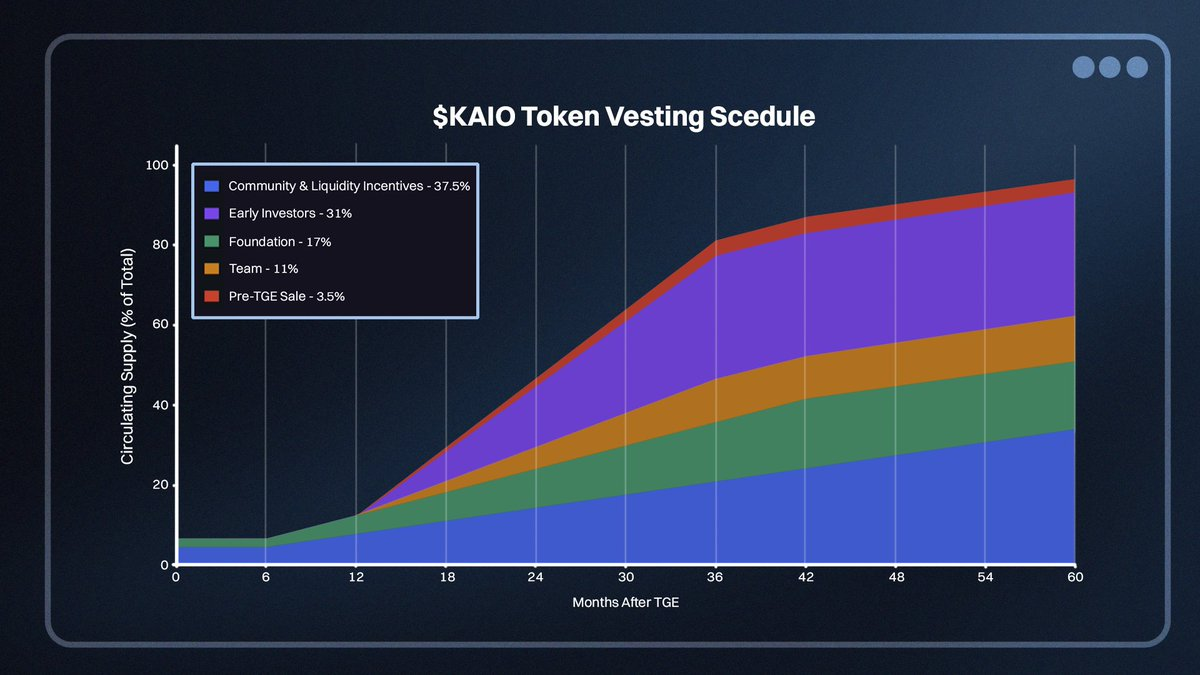
- Community & Liquidity (37.5%): 12.5% unlocked at TGE for liquidity provisioning. 6-month cliff, then linear monthly unlock over 60 months designed around sustained ecosystem participation.
- Foundation (17%): 12.5% unlocked at TGE, 6-month cliff, then linear monthly unlock over 36 months.
- Team, Investors & Pre-TGE Sale (45.5%): 0% at TGE. 12-month cliff, then linear monthly unlock over 24 months.
People also watchReport a Data Error
KAIO Price Live DataReport a Data Error

